

Salafism only exists because of the internet, media, print media, and Saudi petro-dollars. Without this, they would not be able to spread their message throughout the world.
| What is Salafi or Salafism? |
|---|
Anti-madhhabs, i.e. one should not follow one of the 4 established Sunni schools of Islamic jurisprudence (madhhabs).
In other words, Salafism emphasises that every individual needs to go directly to the Quran & Hadeeth and interpret the Quran & Teachings of the Prophet Muhammad ﷺ مُحَمَّد (hadeeth) himself.
Sounds great, but…
This is highly problematic, unattainable for the average person, and is full of contradictions.
| What is traditionalism? |
|---|
The Prophet ﷺ said:
|
|---|
Traditionalism emphasises that every individual needs to learn the Quran & Sunnah, but it should be done through a scholarly approach, i.e., through islamic teaching, mentoring, ijaza accreditation, an islamic institution, and through a fiqh school.
So you cannot bypass centuries of scholarship and start interpreting religious texts of Islam (hadeeths) according to your intellect/and reasoning. For traditionalists, the Quran & Sunnah are not simple concepts that every Joe Blog (“the average man”) can master but rather require training and expertise. That intellect and reasoning and that training or expertise comes through following the rigidity of a school of thought, as well as association and mentoring from scholars.
Salafism, a methodology, is the opposite of the traditionalists’ approach. It emphasises self-teaching. It states, especially the Salafism of Shaykh Muhammad Nasir al-Din al-Albani, that one can read the scriptures (the books of hadeeth) and come to a precise conclusion, interpretation, and legal rulings without the input of a scholar.
| ‘Superiority Complex’ |
|---|
Salafism, adhere to the “Saved Sect” narrative, whereby they are pure & absolutely correct (0% they could be wrong) and on the righteous path (Aqidah and Manhaj), and everyone else, especially those who follow the madhabs (4 imams), are deviant and totally wrong.
Whereas traditionalists, say, are also on the Righteous Path – the Ahle Sunnah wal Jama’ah (Aqidah and Manhaj), but without the dogma and the bravado, and accept there are differences in the fiqh school. The Fiqh school does acknowledge that errors may occur. We are human, after all.
| Self Teaching – Sounds Great but Impossible for Average Person |
|---|
For example, the Salafi sheikh will say;
Muslims are not obligated to follow only one school of Fiqh. Scholars’ opinions serve as a guide, and one should seek knowledge from trustworthy and pious scholars.
These trustworthy and pious scholars will be Salafi (of course).
Traditionalists will argue that if you emphasise self-teaching and oppose a scholarly approach, then why do you need Salafi scholars? Once more, Salafism is riddled with paradoxes.
There are thousands of books authored by Salafi scholars from the 20th century on the Darussalam Publications (Salafi Bookshop) website. Why is it necessary for Salafi scholars to publish books, yet these same scholars preach that, as Salafis, we must study from the original texts and scriptures, or hadeeth? Uncomfortable Contradictions.
| The Problem of Salafism |
|---|
Despite professing to be followers of the Salaf, the SALAFIS refuse to adhere to the four Imams, who are from the Salaf period and are 2nd and 3rd generation muslims, the Taba’een and Taba’ Taba’een.
Salafiyyah asserts that it acts upon the madhab of the Salaf, upon what the Messenger, Prophet Muhammad ﷺ مُحَمَّد, and his Sahabah (رضي الله عنهم) were upon, without actually adhering to their rulings and principles.
|
For example, the Quran Says
|
|---|
LISTEN to it and pay attention that you may receive mercy. |
Sahih Bukhari Says
|
|---|
*** The Salaf SAHABA, Tabaeen & Taba Tabaeen generations, the early Muslims, equate this hadeeth to praying ALONE. SO when you read SALAH ALONE, you must recite Surah Al-Fatiha (which is a surah in the Quran). *** When you are in JAMAAH (congregation), behind the IMAM (leading the prayer) who is reciting the SURAH FATIHA (surah of the quran) you must remain QUIET; that is what the QURAN states, but SALAFIS state, “Listen below.” Remaining Quiet when the Imam recites Surah Fatiha is also the ruling of the early Salafs, whereas the 20th century Salafs abide by their own understanding, even though they go against the Quran. The Shaykh directly rejects the Quran verse because his Salafi Shaykhs state that you must recite the Surah Fatiha at the same time as the Imam. |
They reject Madhabs and Taqleed, but they are more than willing to mention and cite traditional thinkers when it is convenient for them.
You, as an average person, Joe Blog (“the average man”), Salafism at its core, is about self-teaching from the earliest Islamic scriptures (Hadeeths).
Below are the Al-Sihah al-Sittah (Kutub al-Sittah, “The Authentic Six). They are 6 volums, and about 40 books.
Can you genuinely claim to have read all of the books listed below? Even if you had, would you still be able to make sense as an average man?
Salafism holds that everyone should read the Islamic scriptures (Hadeeths) themselves because only then would they be able to emulate Al-Salaf al-Ṣāliḥ (the Pious Predecessors).
Forget about reading them,’ I say. How many people actually own these six book collections—roughly 40 books—at home?
Do you or your parents own these? Were they owned by your great-grandparents or grandparents? Were they owned by your great-great-grandparents?
The answer is no; up until the last 20 years or so, these hadeeth volumes were not generally accessible to the general public; therefore, 99.9999% of Muslims have not had access to them.
Furthermore, Shaikhil Hadees Dar Uloom Deoband Wahiduzzaman Kairanawi translated Sahih Bukhari in 1920, and Mouzeh-i-Quran, the Urdu translation of the Quran, was completed in 1790–91 AD. Because of language obstacles (urdu, pashto, hindi, and bangla transalation), self-teaching of the Quran and Hadees has been impossible in Afghanistan, Bangladesh, India, and Pakistan for the past 1300 years.
The only places you could easily access books would have been Islamic educational institutions (but Salafis claim to be against the scholarly approach). Additionally, remember that education has only become widely available in the last 70 years or so. So even if the Al-Sihah al-Sittah (Kutub al-Sittah, “The Authentic Six) were accessible, most people would not have been able to read and understand them.
For a thousand years, the Ahle Sunnah wal Jamaah method has been that the sunnah, traditions, and knowledge have been passed down from generation to generation without the need for most individuals to read from the hadeeth books. Additionally, learning and knowledge have been facilitated by the scholar class and the use of fiqh materials.
 |  |  | 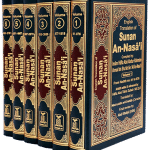 | 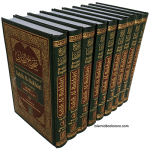 | 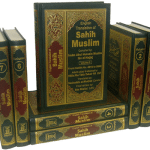 |
Traditionalism is following one of the 4 established Sunni schools of Islamic jurisprudence (madhhabs).
As you can see below, the vast majority of the Ummah have been following, of the 4 schools, from the very beginning of Islam.
The 4 schools of thought were established in the Al-Salaf al-Ṣāliḥ (Pious Predecessors) & The Tabi’een (2nd generation) and Taba Tabi’een (3rd generation).
- Hanafi: the largest Fiqh school (800 million or 45% of all muslims worldwide), covering Turkey, the Balkans, Central Asia, India, Pakistan, Bangladesh, and Afghanistan.
The Abbasid Caliphate, the Ottoman Caliphate, the Mughals, the Taliban, Tablighi Jamaat, Jamiat Ulama Islam, etc., are all Hanafi & Deobandi
- Maliki: 2nd largest, Maliki number about 500 million or 25% of muslims worldwide. Mostly found in some Gulf States, West, and North Africa
The Umayyad Caliphate promoted the Maliki school.
- Shafi: 350 Million or 18% of muslims worldwide, followed in East Africa, Egypt, Indonesia, and Malaysia, and
- Hanbali: Saudi Arabia and Qatar, barely 1% of the muslims population.
The Wahhabi movement (Muhammad ibn Abd al-Wahhab) , and the Saudi ruling family spread. In addition, Salafism is very loosely connected to both Hanbali school & Wahhabism.

